Chess Pin: Can That Defender Actually Move?
A piece can look like a defender while being unable to make the capture you need. Learn how pins change its options, and why a pinned piece is not always frozen.
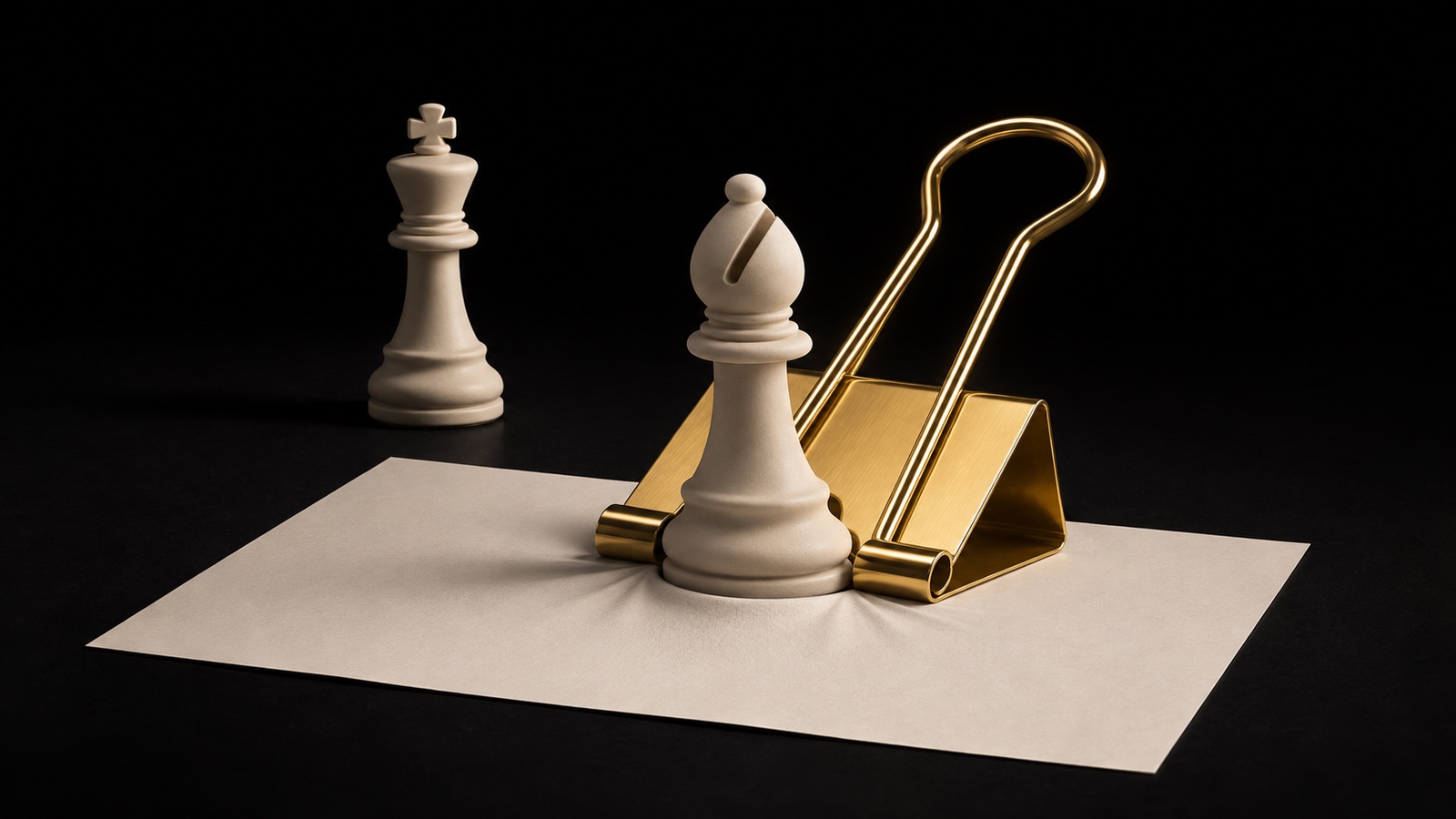
Your knight appears to defend a pawn. Your opponent captures it anyway. Before calling the move a blunder, look behind the knight: if moving it would expose your king, that defender cannot make the capture you were counting on.
A chess pin restricts a piece because something important sits behind it on the same line. The useful question is not just whether a piece is attacked. It is what would happen if that piece moved. That distinction explains why a crowded, apparently well-defended position can suddenly become fragile.
This guide separates legal restrictions from tactical pressure, then shows how to test a pinned defender. Study the examples before or after a game. During play, make your own decisions without outside assistance.
What makes a chess pin?
A pin involves three roles: a line-moving attacker, a piece in front, and a more important target behind it. Bishops create pins along diagonals. Rooks create them along ranks and files. Queens can do either. A knight can attack two pieces with a fork, but it cannot create this kind of line pin because it jumps rather than attacking through a line of squares.
Picture a black rook on e8, a white knight on e2, and the white king on e1, with e3 through e7 empty. The knight blocks the rook's line to the king. If the knight leaves e2, that line opens. White cannot legally make a knight move that leaves the king in check.
Those squares describe the relevant relationship, not a complete playable position. In a full game, check every other piece and threat too. A pin does not suspend the rest of the board, and a move that breaks one pin might expose a different attack.
Compare this with a chess fork. A fork asks the opponent to handle multiple attacked targets. A pin makes moving one target costly or illegal because it uncovers another. They often work together, but they are different patterns.
Absolute and relative pins have different consequences
An absolute pin protects a king behind the pinned piece. Moving that piece off the line would expose the king to check, so such a move is illegal. The restriction comes from king safety, not from the value of the pinned piece.
A relative pin protects something other than the king, often a queen or rook. Moving the front piece is legal if the king stays safe. It may lose material, but it may also create a stronger threat. A player can sometimes ignore a relative pin to deliver checkmate or win something more valuable elsewhere.
Suppose a bishop attacks a knight, with a queen behind the knight on the same diagonal. That is a reason to examine the knight's moves carefully, not a rule that forbids them. Ask what the opponent can actually capture after the knight moves and whether they have time to do it.
This is why saying "that piece cannot move" can be misleading. Sometimes it legally cannot leave a line. Sometimes it can move but pays a price. Sometimes the supposed price is smaller than the threat it creates. Name the kind of pin before trusting the conclusion.
A pinned piece is not always frozen
A pinned sliding piece may still move along the line of the pin while keeping its king shielded. Change the earlier example: black rook e8, white rook e2, white king e1, and no pieces between the rooks. Depending on the rest of the position, White's rook can move along the e-file or capture the attacking rook on e8 without exposing the king to that rook.
The knight in the first example has no such option because every knight move leaves the file. A bishop pinned along a diagonal may have diagonal options. A pawn's possibilities depend on the direction of the attack and the squares involved. Do not apply one piece's movement restriction to every piece.
Capturing the attacker can remove the pin, but the capturing move must still be legal. Another enemy piece may then attack the king. Likewise, putting a new blocker on the line can release the original defender, provided the blocking move does not create another king-safety problem.
There is also an important king-move distinction: an absolutely pinned enemy piece still attacks squares for purposes of deciding where your king may move. You cannot move your king onto such a square merely because the enemy piece could not legally move there without exposing its own king. Counting legal captures and judging attacked squares for king safety are not interchangeable tests.
Test the defender before trusting it
When an opponent attacks a pawn or piece, it is tempting to count defenders and stop. Instead, examine the defender's job. If it moves to recapture, which line opens? Is the king on that line? Is a queen behind it? Can the defender capture along the line rather than leave it?
Use a short sequence when studying a completed position:
- Identify the attacker, front piece, and rear target.
- Decide whether the pin is absolute or relative.
- Write down the specific move you expect the defender to make.
- Check what that move exposes, then examine the opponent's strongest reply.
The third step matters. "My rook is defended" is a label. "My knight can recapture on this square without exposing my king" is a claim you can test. Specific moves reveal mistakes that a quick count misses.
A pin alone also does not guarantee that the attacker can win material. The opponent might move the rear target, add protection, exchange the pinning piece, or make a forcing threat. Keep the blunder-check habit: inspect the reply before celebrating your idea.
How to relieve a pin without creating a bigger problem
Start with the least dramatic solution. Can the rear target move to safety? Can another piece block the line? Can you challenge or exchange the attacker? These changes may free the pinned piece without sacrificing it.
Sometimes you can attack the pinning bishop with a pawn. Before doing so, check whether the bishop can capture the pinned piece profitably, retreat while maintaining pressure, or use the pawn move's newly weakened squares. Asking the attacker to move does not mean it must cooperate in the way you want.
In other positions, defending the pinned piece one more time buys enough time to reorganize. The best response depends on the opponent's threats and your king's safety. There is no universal rule that breaking a pin should take priority over everything else.
When reviewing a loss, find the first moment you relied on an unavailable defender. That is often more useful than staring at the final capture. Note the missed line, the piece behind the defender, and one earlier move that would have changed the relationship.
Practice the pattern in your next free game
ChessBet describes worldwide free play as an entry point for players. Its homepage also presents Blitz, Rapid, and Classical time-control choices. Choose a pace that gives you room to notice the lines behind your pieces rather than forcing every decision into a scramble.
Set one modest practice goal: after the game, find a position where a defender had another responsibility. It need not contain a winning combination. Explaining why a piece was free to move can teach the pattern just as clearly as discovering a pin.
Read the current Official Rules and Fair Play & Integrity Policy before participating. Keep study tools separate from live play. Then start with a free game and make your own decisions. The aim is to see what each defender is actually allowed to do, not merely where it stands.