Stalemate vs Checkmate: Why a Trapped King Can Draw
A trapped king does not always mean a win. Compare two simple positions, learn the legal-move test, and practice spotting stalemate before your finishing move.
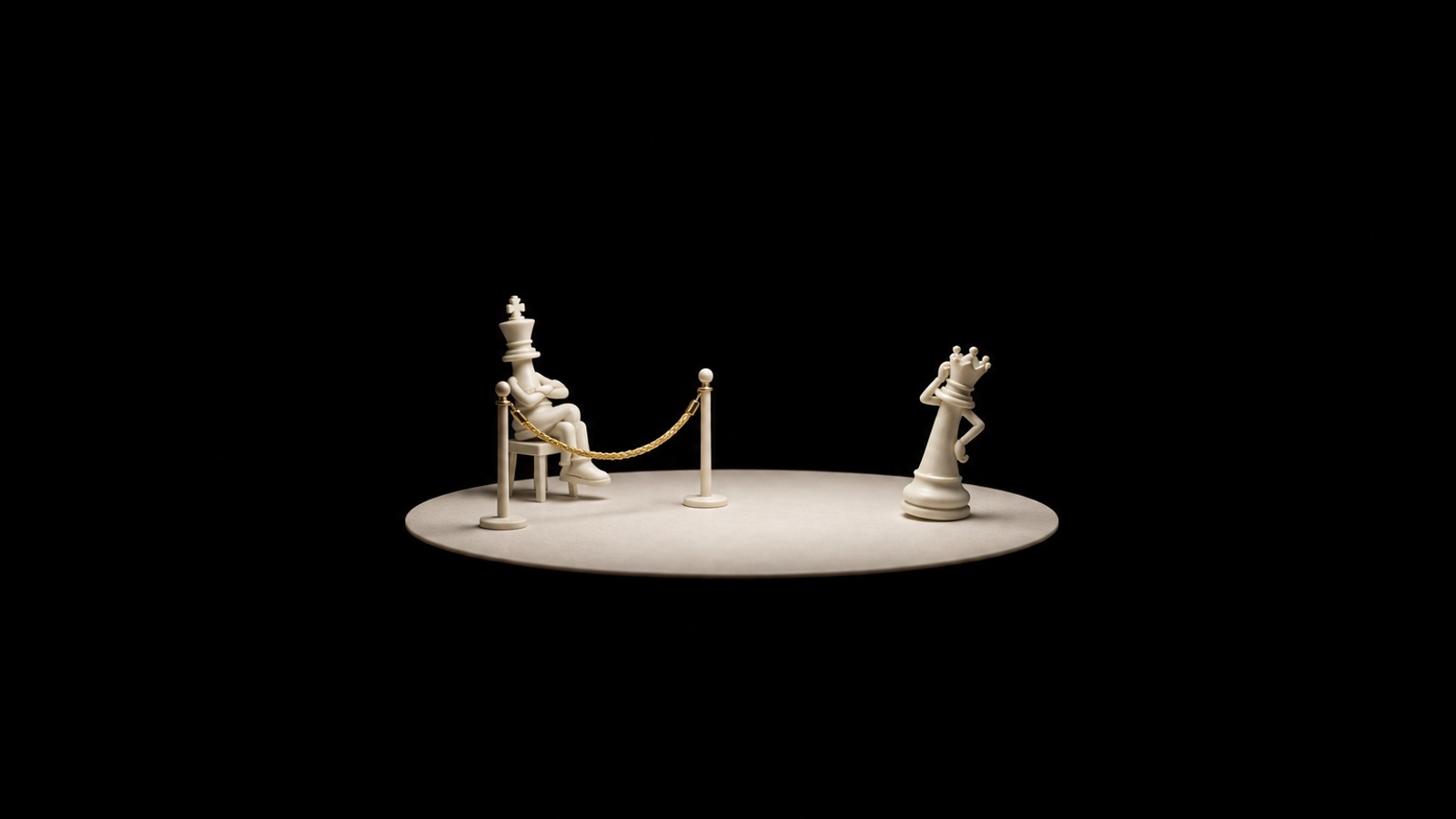
You have an extra queen, your opponent's king is boxed in, and the game ends in a draw. What happened? The difference between stalemate vs checkmate comes down to two questions: is the king in check, and does the player whose turn it is have any legal move?
Checkmate means the king is in check and there is no legal way to escape that check. Stalemate means the player to move is not in check but has no legal move at all. Checkmate wins the game for the player delivering it. Stalemate draws the game. Extra material does not change those definitions.
This guide explains the distinction with two small positions and a practical checking routine. Use the examples on a separate board during study, never as outside assistance during a live contest. Understanding the finish matters in free games and real-money chess alike; it does not guarantee any result or winnings.
Stalemate vs checkmate: the deciding question
Start with the king belonging to the player whose turn it is. Is an opposing piece attacking its square? If so, that king is in check. The player must make a legal move that removes the check. Depending on the position, that could mean moving the king, capturing the checking piece, or blocking the attack. Not every kind of check can be blocked.
If no legal response removes the check, the position is checkmate. The king is not captured. The game ends when checkmate is delivered by a legal move.
Now consider a king that is not attacked. If its player has no legal move with any piece or pawn, the position is stalemate. The phrase “any piece or pawn” matters. A king with no available square is not automatically stalemated: its player might still be able to move a rook, knight, or pawn elsewhere.
For further examples, see Chess.com's guides to stalemate and checkmate. Online platforms also have their own participation and contest-settlement rules. Do not turn a general chess rule into an unsupported claim about refunds, service fees, or payout timing.
One queen square changes the result
Try this study position on an otherwise empty board: White king on f7, White queen on g6, Black king on h8. It is Black's turn. Those are the only three pieces.
The black king is not in check. The queen on g6 does not attack h8, and the white king on f7 does not attack h8 either. But Black has no legal move. The square g8 is attacked by the white king; g7 is attacked by both the queen and king; h7 is attacked by the queen. Black has no other piece to move. This is stalemate, so the game is drawn.
For a second, separate study position, keep both kings where they are and put White's queen on g7 instead of g6. Again, it is Black's turn. Now the queen attacks h8 diagonally, so the black king is in check. Moving to g8 or h7 does not escape the queen's attack. Capturing the queen on g7 is illegal because White's king on f7 protects that square. This position is checkmate.
The two setups differ by just one queen square, but they are not successive moves in an ongoing game. The first position has already ended in stalemate. You cannot continue that finished game by moving the queen. Reset the board to compare the second example.
Why a trapped king is not enough
“The king can't move” describes only part of the position. Before calling a result, look for every legal option available to the side to move. A piece can capture, a pawn can advance, or another piece can move while the king stays put, provided the move leaves that player's king safe.
Suppose you recognize the first three-piece example but the defender also has a pawn elsewhere. You must inspect that pawn before declaring stalemate. If it can legally move, the game continues. If it is blocked, pinned in a way that makes moving illegal, or otherwise unable to move legally, it may not provide an escape. Count legal moves, not merely pieces.
The same care applies to checkmate. A king that cannot move may still be saved by another piece capturing the attacker or blocking a line of attack. Conversely, a square that looks empty may be attacked and therefore unavailable to the king. Empty does not mean safe.
That is why a quick visual impression can mislead you. A crowded position can contain a legal defensive resource. A nearly empty board can already be finished. The actual attacks and legal moves decide.
A practical check before your finishing move
When you have a large material advantage, resist choosing a move only because it takes away another square. First picture the position after your intended move. Ask whether the opponent's king will be in check. If it will not, identify a legal reply for the opponent. If you cannot find one, investigate stalemate before playing.
When your intended move gives check, look for a legal escape instead of assuming the game is over. Can the king move safely? Can the checking piece be captured? Can another piece block the attack? Calculate the actual replies; this is a thinking routine, not a substitute for calculation.
Be especially careful after capturing the opponent's last mobile piece or blocking their last pawn. A move that wins more material can also remove their final legal move. The useful question is not “How much am I ahead?” but “What can my opponent legally do after this?”
Checking every move forever is not a realistic promise in a fast game. Practice the distinction away from the clock so the warning signs become familiar. Start with the two examples above, explain each result aloud, then change one piece placement and reassess from scratch.
Review the mistake without rewriting the game
If you accidentally stalemate an opponent, record the position before your final move while you still remember it. Note the move you chose and what you expected it to do. Then check which legal moves the opponent had before and after your decision.
Look for one alternative that preserves a playable position or delivers a verified checkmate. Do not invent a winning line from memory. If you use an engine or a study board, do so after the game, and make sure the position and side to move are correct. A misplaced pawn can change the answer.
For a repeatable review process, use our practical game-analysis worksheet. Give yourself a specific lesson, such as checking the opponent's remaining legal moves before a non-checking queen move. That is more useful than writing “stop making mistakes” at the top of your notes.
Practice the distinction in free play
ChessBet offers free play worldwide. Start with a free game and keep your live decisions your own. Afterward, revisit any ending where you were unsure whether the king was checked, trapped, or actually mated.
If you later consider real-money chess, ChessBet cash-prize contests require verified players age 21+ and eligibility in Arkansas, Colorado, Georgia, Iowa, Kansas, North Dakota, Texas, Virginia, Wisconsin, or Wyoming. Players must be physically located in a supported location when entering and playing. This is a platform access policy, not government approval, and participation remains subject to applicable law and ChessBet's rules.
Read the current Official Rules for eligibility and contest settlement rather than assuming a drawn chess game has a particular financial outcome. You can learn the same chess lesson without entering a cash contest.
Start playing free on ChessBet. When an ending looks finished, remember the distinction: no legal move plus check is checkmate; no legal move without check is stalemate.